Nothing but the best albums of 2024
December 12th, 2024
It’s the time of year when I commit myself to naming my favourite albums of the year for no other purpose than to remind future me about things I used to like. As is the custom for end of the year lists, I have ten albums. No more and no less.
There have been a lot of albums this year. I’ve bought over 180 that have come out this year. I’ve got a playlist of my favourite songs from all of them, it’s quite long. But, I’ve narrowed it down to ten.
Kayla Painter – Fractures
One of the things about this year is how Bluesky has introduced me to so much more electronic music than I would have normally listened to. Which means I’ve come across a lot of people that I’d never heard of before. This Kayla Painter album is more upbeat then most of the ambient stuff I’ve been listening to and is great.
Kessoncoda – Outerstate
A little bit jazz, a little bit electronic. This has been an album I’ve gone back to week after week. I almost went to see them back in October but got caught up sitting on the settee, and it was raining. Here’s a link to their Bandcamp page
Kelly Lee Owens – Dreamstate
The last half of the year has a flood of dance albums but Kelly Lee Owen’s album stood out as being a lot more creative than all of the others.
Mdou Moctar – Funeral for Justice
Mdou Moctar has been around for years and is by far one of the most creative and interesting guitarists about. This album, apparently, rails against the injustice that is pretty common across the Sahel. I admit not being able to speak French means I missed most of that.
Fieval is Glauque – Rong Weiknes
Every time I listen to this album I feel like it is going to fall apart at any moment. Quite a lot of it doesn’t make sense but holds itself together in a way that is truly surprising. It’s challenging but worth the effort.
BIGHEADMODE – Return! Of the Hellcat
BIGHEADMODE are almost local with one of them living in Birmingham the other in London, which is obviously not local. This is a fantastic mix of jazz and electronic stuff. They clearly have a lot of friends who were willing to contribute to a really varied album.
Fat White Family – Forgiveness is Yours
I’ve always quite liked the Fat White Family and sort of enjoyed seeing them a few years ago. This is the first album they’ve done which I’ve thought is truly great.
Hiatus Kaiyote – Love Heart Cheat Code
I’ve read the description of this on Bandcamp and honestly can’t connect it to the album I’ve listened to. Smooth easy listening.
NIA Archives – Silence is Loud
This album absolutely should have won the Mercury Prize this year. It was absolutely robbed. An amazing debut album.
Floating Points – Cascade
And this is my favourite album of the year. I really liked the Floating Points collaboration with Pharoah Saunders in 2021 but this seems to be getting back to the stuff that I remember from 2017. That’s a very good thing.
That’s all of them. All ten of my favourite albums of 2024.

Posted in Music | Comments (0)
It’s only the best albums of 2023
December 15th, 2023
It’s that time of year when I look back on everything I’ve seen and everything I’ve heard and make arbitrary judgements about quality. Then I pick ten albums, more or less at random, and insist everyone else should listen to them.
It’s been a year of a lot of albums. Absolutely loads of them. As is my custom I’ve made a playlist of my favourite songs from the 149 albums that I liked, that have come out this year. It’s an eclectic range of things but from that 149 I could have easily made a list of my favourite 17 albums of the year. But, the decimalisation of lists doesn’t work like that.
What I hate about this is writing descriptions for albums. Why would people try and describe albums in words? What more can you say beyond “this is good” or “this sounds like……”?
It’s Spotify links throughout. If you use other things like Deezer and Apple……. that’s interesting.
So, my top ten. In reverse order so that I can facilitate tension.
Mandy, Indiana – I’ve Seen a Way – This is good. I’ve been listening to much more ambient electronic stuff this year but this stood out as being more than lush strings over an erratic kick drum.
Sufjan Stevens – Javelin – I reckon Sufjan has managed to release two truly great albums in his life. Obviously, Illinois stands out as being one of the greatest albums ever and Carrie & Lowell is a classic. With Javelin I think he’s added a third. He’s had a rough year with not being able to walk and all the grief.
Matters – Echolocations – Brummie band klaxon. In over a decade of writing about albums, I can’t think of a local band making it onto my list before. This came out in March and I’ve been listening to it consistently since then. Just stretching the definition of ambient into dance, this album is triumphant. I liked it so much I bought a T-Shirt.
Noname – Sundial – This is Noname’s debut album. But she has previously released two mix tapes. I’ll hold my hands up and say that I’ve got no idea what the difference between a mix tape and an album is. I could look it up. I’ve not looked it up. The only thing I know about Noname (apart from her Mix Tapes) is that she always seems quite angry with her fans, and other people. Fair enough we live in a world with a lot to be angry about.
U.S. Girls – Bless This Mess – And U.S. Girls are back. I love this album. It’s good. Meghan Remy is a stone-cold genius with an eye (?) for catchy songs. This almost borders on the Fleetwood Mac at points but that’s not a crime.
Liv.e – Girl in the Half Pearl – I listened to this album so much on Spotify that Liv.e recorded me a personal message, as part of my Spotify summary, to thank me. I’m pretty sure it was just for me. I doubt when she started on this I was the demographic she had in mind. But, there you go.
Ren – Sick Boi – Ren just dominates YouTube with a relentless torrent of songs and I always wondered if he could turn them into an album. He did. This is easily one of the best albums of the year and just incredible that one person could create every element of this without the “support” of a record company. Don’t listen to this if you stand any chance of being triggered by references to suicide. Do listen to this if you can though.
Jesse Ware – That! Feels Good! – Classic feel-good disco, She put it in the title and it’s an accurate description. Revisiting disco seems to have been a theme this year but Jesse Ware did it better than anyone else. I think she’s probably made herself a pension with this album.
Yussef Dayes – Black Classical Music – There is oddly little jazz on my list this year. Don’t worry I’ve not given up on jazz. This is a ridiculous debut solo album. Yussef Dayes is probably the best drummer in the world and this is a perfect vehicle to see his vision for songs and his drumming.
Yves Tumor – Praise a Lord Who Chews But Which Does Not Consume; (Or Simply, Hot Between Worlds) – The first time I listened to this I thought it would probably be my album of the year and I was right. Go me and my ears. I’m still gutted that I didn’t get to see them when they dropped out of touring last year. It’s my album of the year and I haven’t really got anything else to say about it.
That’s everything I have to say on the matter
Posted in Music | Comments (0)
What were the best albums of 2022?
December 14th, 2022
2022 has been one of those years where albums have come out and I’ve bought them. Much like most other years. Just like all those other years, I’ve painstakingly been through every album to try and figure out what my favourite ten are.
If you are interested in everything I’ve found this year then, as always, I’ve made a playlist of the year. It’s a good listen if you put it on shuffle.
Also this year I released my fifth album. It didn’t make it onto my top ten albums because that would have been both weird and unconvincing.
Just to maintain some tension I’ve put my top ten albums in reverse order. It’s a slow build-up unless you read quite fast.
10) Little Simz – No Thank You – I didn’t know whether to include this or not. It only came out at the weekend and I’ve not really listened to it enough to be absolutely sure it is one of my albums of the year. But it shows that good albums come out throughout the year and Little Simz is currently an unstoppable force. After winning the Mercury Prize back in October and having back to back to festival headlines I’d have thought she would want a month off. Apparently not.
9) The Comet is Coming – Hyper-Dimensional Expansion Beam – I don’t want this to look like my token jazz album of the year but it is the only bit of jazz on this list. So it is the token jazz album of the year. It’s been a year of mixed news for Shabaka Hutchings with Sons of Kemet splitting up in the Summer and this album coming out in September. This is The Comet is Coming’s most complete album to date and you should listen to it.
8) Daniel Avery – Ultra Truth – It sounds a bit like early 90s electronica but not in a laboured old man sort of way. I hate lazy comparisons with other bands/styles but you need them if you’re ever going to have any luck describing music. Otherwise, it’s a series of electronic bleeps. Actually this is literally a series of electronic bleeps but with expansive production that sucks you in from the start.
7) The Utopia Strong – International Treasure – It’s really hard to separate The Utopia Strong from being the band that Steve Davis is in and being a band in their own right. This could either make them look like a novelty band, which is really unfair or introduce more people to the exciting world of modular synths. I’m not convinced many people are looking to find out more about the exciting world of modular synth. My other The Uptopia Strong news is that they cancelled their gig in Kings Heath twice this year. I’m still angry about that.
6) Crack Cloud – Tough Baby – Canada never seems to have bands. They always seem to have collectives. My only frame of reference for this is Godspeed You! Black Emperor. So, leaving aside my limited knowledge of Canadian bands, Crack Cloud are, currently, my favourite Canadian collective. I thought this was a complete mess when I first listened to it but it grew on a lot. Give it a few listens.
5) Nilüfer Yanya – Painless – This is another one that grew on me over time. It came out at a really busy point of the year and I think I’d only given it a couple of listens but then saw loads of people talking about it and thought I might have missed something. I had. There are loads of different genres in here but it still maintains a consistency that shows it is all one person’s work.
4) King Gizzard and the Lizard Wizard – Omnium Gatherum – It’s been another relentlessly busy year for KG&LW (I just can’t be arsed to type all of that out every time). From an album of remixes in January to three new albums in October and Omnium Gatherum in the middle. This massive double album covers every style we know them for and is also a great route into the 23 albums they’re released in the last ten years. The opening 18 minutes of the Dripping Tap is just exhausting to listen to.
3) Danger Mouse, Black Thought – Cheat Codes – Danger Mouse seems to have knocked out quite a bit of stuff this year as well. This partnership with Black Thought sounds both very old and very new all at the same time.
2) Jockstrap – I Love You Jennifer B – Jockstrap is the worst name for a band. It’s terrible. They create a mental image that couldn’t be more removed from what they sound like. This is probably the most creative album I’ve listened to this year and probably my gig of the year as well.
1) Charlotte Adigéry, Bolis Popul – Tropical Dancer – And my album of the year is Tropical Dancer. Belgium’s finest electro pop by some way. This takes a quick trip through racism (opposing it) and mysogeny (also opposing it) whilst being perfect electronica. It’s good to listen to and it’s good work to.
That’s my lot for 2022.
Posted in Music | Comments (0)
The Best TV of 2021
December 30th, 2021
It’s never occurred to me write a list of my favourite TV before. But I do watch more TV than is good for me and I’ve looked at loads of other lists and they’re all wrong. So, I’ve got a bit of time on my hands and a need to organise things into lists.
Looking back on the last year I think the main thing that has struck me is quite how bad UK TV has become. The quality of drama writing has been a challenge for many years but 2021 has been a year where the UK has struggled to make anything of note.
Also a thing I’ve noticed about other lists is that they have tended to ignore series that have just finished. I assume this is linked to media deadlines. But it means that many of the really good series of 2021 have not appeared in many “best of” lists.
And in reverse order this is 2021:
Sweet Tooth (Netflix) – Sweet Tooth appeared on Netflix back in June and joined the long list of post apocalypse series that seem to be endemic this year. I’m surprised that this is my only Netflix series of 2021. The quantity of Netflix content is largely overwhelming but, on the whole, also pretty good quality. But clearly not quite good enough for my list. Sweet Tooth is an endearing story of what happens when a pandemic appears to lead to children being born as animal human hybrids. It’s based on a graphic novel and is fantastically colourful. My only gripe with it is that it ends on the most blatant pitch for a second season that I’ve seen in a while. Almost ending mid sentence.
Startstruck (BBC) – Starstruck is the only series made by the BBC on my list for this year. Although the BBC have lost the ability to make drama they can still do comedy. Rose Matafeo wrote and stars in this story about a woman from New Zealand living in London. Which proves that writing about what you know often works. It’s on the iPlayer so give it a watch.
The Investigation (SVT) – The Investigation tells the story of the murder of Swedish journalist Kim Wall. It’s a really unusual series in that it tells the story of the case and the investigation without any real reference to the murderer. It’s really good to see something that doesn’t graphically exaggerate a crime but tells the story of the victim and the family. It also features many scenes of angry frogmen. I’ve no idea where you can watch this. I think I saw it on iPlayer months ago but having just looked I think they’ve only got the last episode now. Which isn’t much use.
Bosh (Amazon Prime) – This was the seventh and final season of Bosch. Amazon don’t make as much content as Netflix but there ae number of things they’ve made where their limitless money has helped quality to shine through. Bosch is probably the best police procedural in the last ten years and this final season was a great end. We’ll miss Titus Welliver’s understated lead. Back when this started he was a surprise pick for a lead, to me at least, but he has proven he can carry a series.
Only Murders in the Building (Hulu/Disney+) – Steve Martin’s Only Murders in the Building is an excellent comedy murder investigation about podcasts. It’s an all star cast with Steve Martin, Martin Short, Selena Gomez and Sting. Sting playing himself and being surprisingly good at it. Originally on Hulu it’s available in the UK through Disney+. Disney has turned out to be the most consistent quality streaming platform this year. I’m surprised because it started off pretty badly. I think the addition of Starz has helped to dramatically increase the content beyond the stuff you’d expect from Disney.
Mr Inbetween (FX Australia) – Mr Inbetween has been a massively underappreciated fixture of the last few years. Scott Ryan wrote and stars in this story of an Australian hitman who is also a really nice bloke. It’s got many ridiculously funny and extremely violent stories but at the heart of it it’s a man just getting on with the job of killing people. This was the final season and had an ending that was equally surprising and banal. I’ve no idea where you can watch this in the UK.
Landscapers (Sky) – Landscapers appeared on Sky in the last couple of weeks and is an example of the sort of drama that the UK used to make. Darkly funny it tells the story of a couple murdered in Nottinghamshire in 1998, a crime that wasn’t discovered for a decade. It’s helped along by Olivier Colman and David Thewlis but it is the writing that makes it work. There are only four episodes. You could watch it in an afternoon.
Hacks (HBO Max) – Hacks is easily the comedy series of the year. It’s no accident that it hoovered up Emmys. Telling the story of a disgraced comedy writer trying to write stand up for an established stand up legend. Everything about this works. It’s absurd and in places disgusting. Both Jean Smart and Hannah Einbinder work amazingly well together creating a relationship that is compelling event though they are both horrible people. Again, I’ve no idea where you can watch this in the UK.
Swagger (Apple TV) – Apple TV have been a bit of a joke in terms of streaming TV. They seem to make TV by the numbers but never really making anything worth watching. With Swagger they have, at last, made something great. Made by the people who made Friday Night Lights (the greatest TV series ever made) Swagger follows a youth basketball team trying to win the nationals. The thing it does better than any other series is capture the mood of 2020. From the pandemic through to the public recognition of Black Lives Matter. I’ve not seen any other series that has deliberately embraced the last few years in the way Swagger has.
Dopesick (Hulu/Disney+) – I’m not really sure why this hasn’t got as much attention as it deserves but it has been the best series of 2021. Dopesick tells the story of the creation of Oxycontin and how Purdue Pharma used it to wreck communities. Michael Keaton being in it is an obvious big name, but this tells a complex story over many years and he only contributes to one part. Even though the story itself is complex the series tells it simply and more importantly entertainingly. It’s only eight episodes so pretty easy to watch quickly.
Well there you go. These are the series that I think you should have watched or make the effort to watch. They were the best of 2021.
Posted in Uncategorized | Comments (0)
Albums of 2021, what were the finest?
December 15th, 2021
Keeping up a well trodden tradition of one blog post a year here it is, my favourite albums of 2021. It’s been an interesting year for albums. I don’t know whether a lot had been stored up through 2020 because of the pandemic but it seemed like there was a constant stream throughout this year. Some good, some pretty bad. But this post isn’t bothered about the bad things.
As always I’ve kept a record of my favourite songs from albums released this year. You can listen to my playlist here. It’s an eclectic mess of a playlist but that’s my thing.
So, here we go. In reverse order my favourite ten albums of 2021.
10 – Hannah Peel – Fir Wave
If you like ambient soundscapes then you’re going to like Fir Wave. The whole album is an interpretation of Delia Derbyshire’s work with the BBC Radiophonic workshop. There has been quite few things this year to mark the twentieth anniversary of Delia Derbyshire’s death, not least the excellent BBC documentary The Myths and the Legendary Tapes. But this album stands out as a great tribute in that it takes the music even further.
9 – Bachelor (Jay Som & Palehound) – Doomin’ Sun
If you’ve followed my albums of the year lists before then you might have a vague recollection that I think Jay Som is one of greatest guitarists in the world. This collaboration with Palehound is excellent. Really heartfelt songs which are catchy. You can’t ask for more than that. Stay In The Car particularly has a lot of the 90s about it. It’s good, go and listen to it.
8 – Mdou Moctar – Afrique Victime
Mdou Moctar is often described as the Hendrix of the Sahel. I reckon that’s because he plays the guitar and people can’t think of any other guitarists. He doesn’t sound anything like Hendrix. I reckon the more familiar Tinariwen have done loads to promote music from the Sahara to European audiences and Mdou Moctar sounds similar. But he is from Nigeria and I have no idea if he considers his music to come from the same genre. He’s coming to Birmingham next year and I’m going to see him.
7 – Magdalena Bay – Mercurial World
This was a late addition to my albums of the year. I noticed it in a load of albums of the year lists but hadn’t actually heard of them. It’s really good. At first listen it comes across as lightweight synth pop but there are little bits in there where you can tell they’re trying to inject a bit of tension that shouldn’t be there.
6 – Kaidi Tatham – An Insight To All Minds
I had no idea who Kaidi Tatham was until I went to see Nubya Garcia in November. She was really enthusiastic about her recent remix album, which is fair enough, it’s good. She played Kaidi Tatham’s version of La cumbia me está llamando and I thought I’d make the effort to find out who he is. Apparently some people know him as the UK’s Herbie Hancock. It seems a bit reductive but this album is epic, and yeah, it does have a lot of Herbie Hancock in it.
5 – Theon Cross – Intra-I
What do you get if you mix the tuba, jazz and hip-hop? Intra-I, basically. Theon Cross is an ever present part of London based jazz. He’s a member of Sons of Kemet, he appears on albums by Nubya Garcia, Kano, Moses Boyd and Emeli Sande. He’s everywhere. His second solo album is easily one of the best albums of the year. It’s undeniably a jazz album but covers so many different genres that just aren’t jazz, you would barely notice.
4 – Squid – Bright Green Field
I’ve been waiting for Squid’s first album for two years. Ever since I didn’t go and see them at Future Days back in 2018. people have told me in too much detail what I missed. I don’t really know what post punk means. Shouting? It’s a bit shouty, but pleasantly shouty.
3 – Low – Hey What
Over the years I’ve never really been sure how I feel about Low. That’s not strictly true. Generally I’ve found them a bit dull. This album is a notable journey into lo-fi Americana, a relentless listen and not at all dull. This would have been a strong contender for my album of the year but it’s been a busy year.
2 – Dry Cleaning – New Long Leg
I love Dry Cleaning. Florence Shaw’s observations on life are just funny and relatable. They’re not a million miles away from the Sleaford Mods but just much easier to listen to. Rather than relying on fairly standard backing tracks they are a really tight band that in many cases are just going for it behind a woman talking about bouncy balls. This is the content we want.
1 – Little Simz – Sometimes I Might Be Introvert
In 2019 Little Simz made one of the best albums of the year (Grey Area) but I didn’t really notice it until it was too late to add to my list. Sometimes I Might Be Introvert is a very different album. It’s almost cinematic in scale. Not just scale in terms of 19 tracks but also scale in terms of production. Every track just sounds enormous. It’s been a great year for Little Simz. Although she has obviously been held back in touring just seeing how much her tickets go for you can tell she is going to end up being really really famous. She also had Venom used in the soundtrack for Venom: Let There Be Carnage. It might have been the serendipity of having the film name in the title of her song but it was also by far the best part of a terrible film. Ignoring my adhoc film review, go and listen to this album.
That’s my list.
One of things that is also worth mentioning is that 2021 has also been a year of really good remix albums. I mentioned Nubya Garcia’s SOURCE#WEMOVE but there was also GoGo Penguin’s GGP/RMX, Jazz is Dead’s Remixes JID010 and Caribou’s Suddenly Remixes. Are there always a lot of remix albums? I’m not sure whether I include remix albums in my list but there are all worth listening to.
Until next year.
Posted in Music | Comments (0)
Albums, Albums, Albums (from 2020)
December 16th, 2020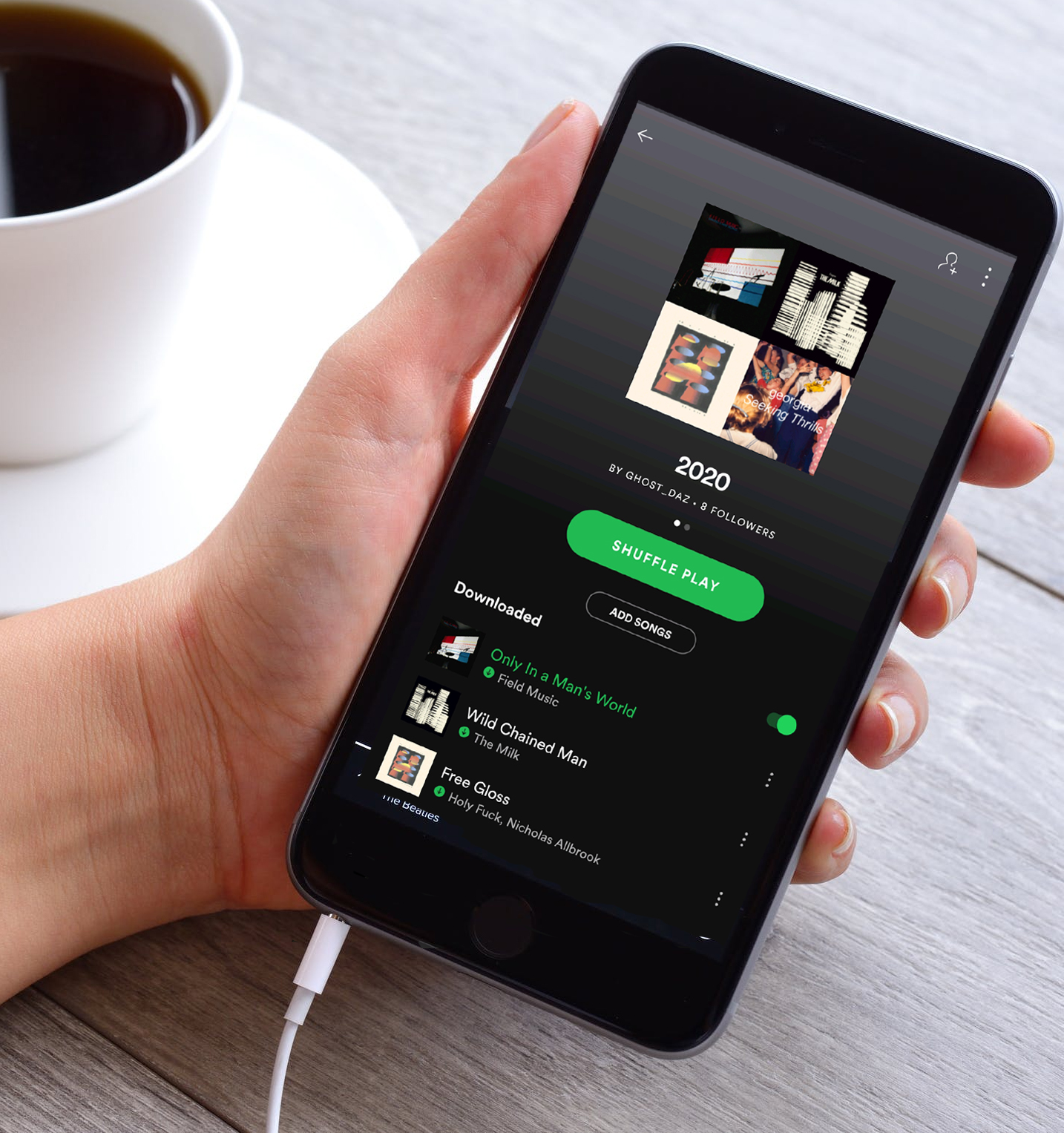
Keeping up my relentless pace of one post a year I thought it was vital to share my favourite albums of the year with you. I first started listing my favourite albums of the year in 2010 so this is a bit of a milestone.
Looking back on 2010 there’s probably only three that I’d bother to listen to now. Three isn’t bad is it?
I’m not going to waste your time giving you any context about 2020. I imagine you’ve done the same thing that I’ve done, stayed at home and bought more albums than you should have done. Which of these did you buy? Or more importantly what did I miss.
As always I’ve created a playlist that has just about all of my favourite songs from albums I’ve bought this year (and were released this year). You can play my playlist on Spotify.
Anyway, let’s get on with it. In reverse order because this is how suspense works.
10) Working Men’s Club – Working Men’s Club – They’ve been about for a while and I always wondered when they would get round to releasing an album. It turned out it would be this year. It was worth the wait.
09) Georgia – Seeking Thrills – From very early in the year this was an album that Spotify recommended to me. I bought it, I listened to it, I thought nothing of it and forgot it for a month or two. And then just kept going back to it. It’s a grower.
08) Caribou – Suddenly – More than anything I’ve listened to this because Never Come Back is probably one of the songs of the year. I seemed to hear it all the time. I was going to say it was everywhere I went. Which is true but that’s largely in my house.
07) Holy Fuck – Deleter – I was really looking forward to seeing Holy Fuck again this year. I didn’t. I’ve always had a soft spot for them but this album is definitely a step up. Even though I’ve listened to it loads I still seem to relentlessly Shazam the song Deleters.
06) Run The Jewels – RTJ4 – In a year with a baffling number of things to be angry about there is no substitute for how eloquently angry RTJ are. This album is immense. Even with cheeky bit of jazz on the last track.
05) Sault – Untitled (Black Is) – Nobody knows who they are. They’re a mystery. Some people say they sound like any number of the London acid jazz bands back in the 90s. I don’t agree with that. They released two albums within 12 weeks of each other but I reckon this is the better one.
04) Motorpsycho – The All Is One – Norwegian prog rock. That’s it. It has songs with numbers in the title like it is trying to tell you a story. Perhaps it is. Motorpsycho have been going for 31 years now and I think this is the point they’ve peaked. Though that sounds a bit negative about their next album.
03) Sufjan Stevens – The Ascension – Has Sufjan Stevens really released a great album since Illinoise? I’m sceptical and I’ve bought all of them. Carrie & Lowell was good but, I think, not great. The Ascension on the other hand is great. Ask me about this in a years time and see if I agree with myself.
02) Thundercat – It Is What It Is – After Drunk was my favourite album of 2017 I was really excited about this. And it is another classic album. Nobody does whiny vocals and widdly bass like Thundercat. And he does that with relentlessly good guests. For example watch this video of Thundercat with Ariana Grande doing Them Changes. The look of “Why is this happening?” in the perfectly long bass solo is great.
01) Nubya Garcia – Source – My album of the year and unapologetically jazz. Nubya Garcia must be the most talented saxophonist in the world at the moment. In a world that is full of ridiculously talented jazz saxophonist. This album sums up why London is the centre of the jazz world at the moment. Even if you don’t like jazz you will like this (you probably won’t).
There you go.
I’m not leaving here without mentioning that I’ve also released my 4th album this year. You can listen to Legitimate Concerns About Quality on all streaming platforms.
Well that’s all the WordPress plugins updated and the site seems stable. So, I will leave this here until this time next year.
Posted in Music | Comments (0)
Simply the Best (Albums of 2019)
December 16th, 2019
I did it. I managed to go an entire year without putting anything on my blog. An entire year.
But that’s not important. What is important is that I know what my favourite albums, released in 2019 are. It’s been a good year for albums. Nine years into making these lists I think the thing I need to grasp is that it is always a good year for albums. I’ve been maintaining a playlist of my favourite songs from 2019. You can listen to it and judge 2019 for yourself, through my ears.
But what are my favourite albums? Here they are in order, just to build tension and to encourage you to read all the way the bottom.
10) Ibibio Sound Machine – Doko Mien – I’ve not paid a lot of attention to Ibibio Sound Machine before but this album is great. It seamlessly combines afrobeat with analogue (sounding) synths in a way that shouldn’t work but really does. A band I managed to miss seeing quite a few times this year.
09) Bill Callahan – Shepherd in Sheepskin Vest – It’s been quite a few years since Bill Callahan released anything. I assume he has been saving up songs for this hour and three minute epic undertaking. Largely just one man and an acoustic guitar his songs are always poignant and usually funny.
08) Sturgill Simpson – Sound and Fury – Genuinely, what is this nonsense? The first time I listened to this I thought it was one of the worst things I’d ever heard. But I kept going back. A frightening mixture of disco, country music and ZZ Top means this shouldn’t work. Maybe it doesn’t and I’ve now become hostage to it.
07) Foals – Part 1 Everything Not Saved Will Be Lost – They released two albums this year (Part 2 being the other one) but I really like this one. Part 2, not so much. I get the feeling people are starting to get a bit bored of Foals now. I’m not. I still think they are one of the most inventive bands around, even though everything they invent sounds a lot like Foals.
06) The Comet is Coming – Trust in the Lifeforce of the Deep Mystery – After two years off this is a relentless return to form. This is also the only thing close to jazz on my list. Which is a shame. I can’t listen to this without wondering how quickly Shabaka Hutchings could blow a balloon up. He must have lungs like a steam engine (I’m not sure that’s a good analogy).
05) Dave – Psychodrama – I’d missed Dave’s first album in 2017. When this came out, with really good reviews, I was dubious. I didn’t think he’d put enough effort into his name. But I did listen to it and it’s amazing. Stunningly personal songs make fifty minutes fly by. He got the Mercury prize for this. One of the few years I completely agreed with their choice.
04) Floating Points – Crush – If you’re looking for outstanding electronica then stop now. You’ve found it. Even though this appears in the top half of my list I can’t think of anything to say about it. It’s largely a load of harmonising bleeps. Which is a good thing.
03) Flying Lotus – Flamagra – Just about everyone turned up to take part in this (George Clinton, Anderson .Paak, Thundercat). In some ways it is a summary of all of 2019. Many of the guests on this have, in turn, made outstanding albums in their own rights. I don’t think there is a bad song on it, and that says something as it has 27 tracks.
02) Lizzo – Cuz I Love You – Name me one person that hasn’t been empowered by Lizzo this year. You can’t can you? That’s because she’s been everywhere. Everywhere, empowering everyone. Leaving the empowering aside this album is a stone cold classic. I can also guarantee that now I’ve reminded you that Juice exists it will be going round your head for the next week. Because it is the most catchy song ever written.
01) Billy Eilish – When We All Fall Asleep, Where Do We Go? – Well this surprised me. Though it probably hasn’t surprised all the people who I have endlessly banged on about it to. When I started collating these lists it never occurred to me that at some point my musical taste would synchronise with a generation of 13 year old girls. But there you go. This is one of the most inventive albums I’ve ever listened to. And I’ve listened to this a lot.
There you go. My 2019.
Actually, one more honourable mention .Kamaal Williams – DJ – Kicks was one of my most listened to albums. But as it’s essentially a mix rather than an album it fails against certain arbitrary rules I’ve made up. But definitely worth listening to.
See you next year for another list.
Addendum
If feel like a bad person. Like I’ve let everyone down figuratively and literally. How could I have forgotten Anna Meredith. So here’s an extra one.
– – ) Anna Meredith – FIBS – Anna is unique in what she does. Is it electronica? Is it jazz? Is is classical music? Nobody knows. Though we all claim to know. This album spans all of the above and is a little ray of cheerfulness for it.
I’ll make better lists in future.
Posted in Music | Comments (0)
The Finest Albums of 2018
December 13th, 2018
It’s here. You’ve all wanted to read it. My list of the best albums of 2018. Why does this differ from everyone else’s album list? It’s made up of the albums I bought this year so is utterly skewed by my odd music taste but isn’t everybody’s list?
As always, there is a playlist which has my favourite songs from albums I’ve bought. It’s here. Also, as has become customary, I need to plug my third album that came out this year. You can listen to Outsourcing Efficiency here.
I’m not going to bother telling you how there were loads of great albums this year. There are always loads of great albums. It’s relentless. It is worth mentioning that only four of my top ten albums have any vocals on them. That’s a bit odd.
Here we go. My favourite albums in some sort of reverse order.
Singularity – Jon Hopkins This came out in May this year and is a fantastic sweeping electronic album with lots of nods to 90s/00s techno. It’s exactly the sort of thing I thought I’d stopped listening to many years ago but it seems not.
Heaven and Earth – Kamasi Washington 2017’s – The Epic was an astounding first album. It was as described, epic. Could that be beaten? I’m not sure if this is better, mainly because the sheer scale of it is too enormous to be listened to in one go. Unless you have a spare four hours. Even at four hours long it isn’t just filling up CDs for the sake of it. Kamasi has a vision of jazz that goes back to the large jazz orchestras of the 30s but is very much based in the 21st Century.
All Melody – Nils Frahm More jazz. Well much more on the electronic end of jazz. Loads of synths and piano creating long atmospheric sounds. It’s the best album of the year to have a nap to. That wasn’t quite the complement I intended.
Wonder Trail – Dinosaur At this point it looks like this is my list of jazz and electronica albums of the year. Dinosaur are one of the most gifted bands I’ve ever seen. Laura Jurd plays the most amazing trumpet, frequently whilst playing a synth with the other hand. This album fluctuates between a straight up jazz album with crazy synth bits popping up randomly.
Performance – White Denim Yay, an album with proper songs. White Denim have changed a lot over the last few years. Personnel changes have driven them to sound much more like singer James Petralli’s solo Bop English project. Which is fine with me. Adding in Michael Hunter, playing keyboards, makes bits of this album sound like Hawkwind. If you’re looking for a Texan version of Hawkwind then this could be for you.
Komischer Laufer – The Secret Cosmic Music of the East German Olympic Programme 1972 – 83, Volume 4 I’ve included this less for the album itself and more because despite having been told about the series for years it’s the first time I paid attention. It is claimed that all four of these albums are undiscovered electronic music written to inspire the East German Olympic Team. Yeah, I did believe that for a couple of hours. All the albums are amazing but volume 4 is one of the best.
Remain in Light – Angelique Kidjo This album is a song for song cover of Talking Heads’ Remain in Light. All done as sort of afrobeat. I can’t say I know the original Remain in Light that well, beyond the obvious songs. I love this album. Every song works and sounds very different to the original, yet obviously the same.
Hormone Lemonade – Caverns of Anti-Matter I’m not sure who Caverns of Anti-Matter are. This album is a psyche rock instrumental thing. This is by far the album that I’ve listened to the most this year.
Twenty Two in Blue – Sunflower Bean There isn’t a bad song on this album. There is so much of the 80s in this but obviously made today. I need to stop comparing them to Fleetwood Mac because that is just lazy. They do sound a bit like Fleetwood Mac
Twin Fantasy – Car Seat Headrest In some ways this is a cop out for my favourite album of the year. Will Toledo originally recorded this in his house and released it in 2011. He was obviously quite attached to it as he went back and had another go at it. Not just sitting down and recording it again but rewriting all of the songs. It’s an amazing album with much deeper and creative songs than you think when it starts. If you buy one album this year, buy this. If you’ve got to December and not bought an album so far I have a feeling that you won’t like this much.
That’s my albums of the year. Much less varied than normal but I’m getting old.
Posted in Music | Comments (0)
Creating an SSL Certificate from a Text Certificate
June 14th, 2018 A rare blog post and an extremely niche one. Have you ever tried to create a SSL private key file (PFX) from text certificates? I have and it’s taken me a long long time to figure out how to do it. As I couldn’t find any site with simple instructions on how to do it I thought I’d write it down. I now know this will be here next time I need to do it when I’ve completely forgotten.
Using Microsoft Azure is great for hosting sites but comes with little in the way of support unless you pay for it. That’s fair enough, it is aimed at much more qualified people than me. I needed to attach some SSL certificates to some sites and realised that Azure requires you to upload a PFX file containing the certificate. I bought my first certificate direct from Comodo, that cost £300 for three years, which is quite a lot money. Comodo supplied the certificate as a .crt file. That’s not accepted by Azure either but downloading Digicert Certificate Utility provides a really easy way to export as a PFX file.
For hosting a lot of my sites I use Dreamhost who provide Comodo verified SSL certificates for $15 per year. I honestly don’t know what the widely different prices in SSL certificates are about but I assume a Comodo verified certificate is trustworthy. Dreamhost certificates are fine if you are hosting a site on Dreamhost, it just applies the certificate to the domain. It’s less useful if you are just hosting the DNS with them. They provide the certificate and private key in text format.
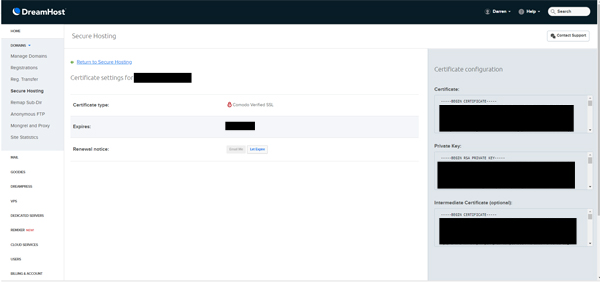
Given the $15 per year price I’ve been trying to figure out how to turn the text file into a PFX file. It’s taken a while to figure it out and I couldn’t find one site to tell me how to do it.
Step One – Create a TXT File
The first step is copying and pasting the text from the certificate and key into one file. The format for this is:-
—–BEGIN RSA PRIVATE KEY—–
(Private key text)
—–END RSA PRIVATE KEY—–
—–BEGIN CERTIFICATE—–
(Certificate text)
—–END CERTIFICATE—–
—–BEGIN CERTIFICATE—–
(Intermediate certificate text)
—–END CERTIFICATE—–
Save this file as your.domain_pem.txt
Step Two – Convert the TXT file
We are aiming to turn the TXT file into a format that Digicert can import and then export again as a PFX file. To convert the file you need to use OpenSSL.
Once you have OpenSSL installed you will need to run it from the command-line (I did all of this on a Windows machine). The first problem I encountered was not changing the command-line directory to the directory I’d installed OpenSSL in. Consequently, it didn’t recognise OpenSSL as a valid command. Once I’d navigated to the right directory I was away.
The command line instruction is:-
openssl pkcs12 -export -inkey your-domain_pem.txt -in your-domain_pem.txt -out your-domain_key.p12
A thing to note is that you do need the full path to your-domain_pem.txt or it won’t know where to find it. Honestly, I cheated and copied the file into the same directory as openssl.exe as I’m lazy. Running this command will, first of all, ask you for a password (input twice to verify) and then it will create a file called your-domain_key.p12.
This is all you need to create your exportable certificate.
Step Three – Create a PFX
To create a PFX file you need to open up Digicert and import your-domain_key.p12. As part of the import process, it will ask you for the password you created as part of Step Two. Once it is listed as one of your SSL certificates you can press “Export Certificate”.
When you export the certificate it will ask you to input the password twice.
Step Four – Use your certificate
You can easily add the newly created PFX file to Azure as a private key. It will ask you to input the password again as part of the upload process. You can then bind the certificate to the domain.
That’s it. I’ll be back here to read this once I forget how to do it.
Posted in Misc | Comments (0)
Regulatory Divergence
February 21st, 2018Since the EU referendum, it’s interesting that there still seems to be some reluctance to articulate what the benefits of leaving the EU are. Throughout the referendum, we were told that EU regulation strangles businesses yet there didn’t seem to be anyone that could set out which regulations were actually causing problems. So I was really interested to see Iain Duncan Smith on Daily Politics yesterday actually giving some examples of regulations he would like to get rid of. That’s useful, instead of talking in vague terms it’s something we can genuinely assess whether or not it will be beneficial to us. The four regulations he listed were:
- Clinical Trials Directive
- Mifid II
- Solvency II
- Labelling
You can watch him here. I wouldn’t bother with all of it as it turns into the standard bad-tempered argument after about three minutes.
I thought it might be useful to go through each of these regulations to have a think about whether we really want to get rid of them. There is the caveat that the Clinical Trials Directive is a directive rather than a regulation. The difference being that directives are based on individual countries legislating to achieve shared objectives but that’s just pedantic so I’ll let him have that. Also labelling is a concept rather than a regulation but I’m sure he had specific regulations in mind.
The Clinical Trials Directive – this was brought in to try and get all member states to harmonise the way they carry out clinical trials. That, on the face of it, sounds like a good idea. If you carry out a trial in one country then it should make it easier for that trial to be recognised in another country. Since 2003 there have been many criticisms of how the directive has worked. The bureaucracy involved is said to have reduced clinical trials by as much as 25%. That does sound like Iain might have a point; except we are in the process of getting rid of the directive and replacing it with a new Clinical Trials Regulation that reduces red tape. It’s due to be in place in 2019. Which raises the question of whether Iain wants to get rid of the old one or the new one? Either way, I can’t imagine a situation where UK based pharmaceutical companies will want to conduct trials that are not consistent with EU regulation. Unless of course, they decide that the EU isn’t a market they want to trade in.
Mifid II – The Markets in Financial Instruments Directive (note this is also not a regulation) was created to address some of the issues raised by the 2008 financial crash. Iain raises the point that markets are being destroyed by regulation but surely financial services are the one market where it is obvious we seriously lack regulation? This directive is intended to bring in more protection for investors and make transactions transparent. That sounds pretty good on the face of it. There are concerns that these regulations will reduce payments for research and sales services which might cause stockbrokers to focus on markets outside of the EU. That could be something to be concerned about but it will happen whether we implement the directive or not. If we want to trade financial services into the EU then we will need to be Mifid II compliant. There is also nothing in the regulations that stop stockbrokers focussing on markets outside of the EU at the moment or in the future. There is a moral question here, is financial services an area we really want to deregulate? It went horribly wrong with the regulations we’ve got at the moment, having less of them doesn’t seem a great idea.
Solvency II – Solvency II was created to harmonise EU wide insurance provision and actually replaced 14 existing EU insurance directives. That sounds like the sort of reduction in regulation that we are apparently after. The idea behind Solvency II is to reduce the risk that insurance companies, in different parts of the EU, are unable to meet claims. Supposedly this will give consumers across the EU faith in insurers as well as giving people more choice of insurance that they can buy. That sounds pretty great for consumers but UK based insurance companies have generally not been happy about it. As it requires insurers to hold more cash, in order to be able to settle claims, I can understand why they don’t like it. There has been some lobbying by the Bank of England to change the way Solvency II is implemented, and they’ve had some success, but it still looks like insurance companies are quite enthusiastic about getting out of the EU. This does seem to be a regulation that insurance companies don’t like but I’m not convinced that’s a good enough reason for me not to like it.
Labelling – Iain made the fairly bold claim that “some labelling is now bigger than the packaging”. This claim defies science so I’m not sure what to make of it, other than to assume it’s probably nonsense. It’s tricky to figure out what directive he wants to get rid of, is it the Food information for consumers legislation or the EU’s Energy Labelling Directive? I’m not sure. Either way, the argument is that the requirement to give consumers too much information is hampering business. I sort of like information, in an age where we are battling obesity I’m not convinced by the argument that we need to reduce nutritional information for people.
The common theme, through these regulations, is that getting rid of them might make life slightly easier for businesses and that could make them more profitable. That is until they reach the point that they need to trade with the EU. Then it doesn’t really matter whether these regulations are codified in our law or not, businesses still need to be compliant with them. If they aren’t forced to be compliant by law then they will have to prove to the EU that they are compliant. That will cost businesses money.
There is the argument that these regulations shouldn’t apply to businesses that have no intention of trading with the EU. Can we really say that is the case with pharmaceuticals, financial services, insurance and food? All of them seem to be key export businesses so not really the first ones that need regulatory divergence. I’m not convinced that these are the regulations that we really benefit from removing.
Posted in Politics | Comments (0)